
Traveling Through Thailand as an Eating Disorder Therapist
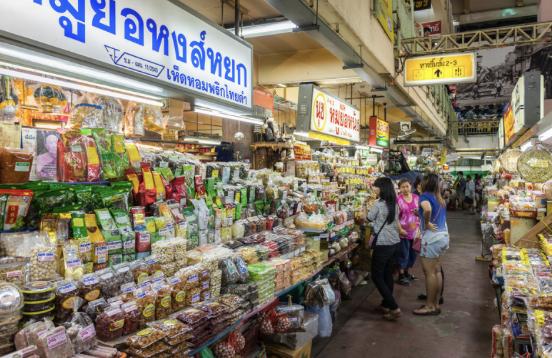
Traveling through Thailand as an eating disorder therapist, I find myself constantly observing the subtle ways culture shapes people’s relationships with food and bodies. But one thing becomes clear very quickly: Thailand is not one story.
What I see in a bustling Bangkok shopping district looks very different from what I see at a local night market, in smaller towns, or among older generations. Like many places, Thailand sits at an intersection between traditional culture and rapidly expanding global influence, and nowhere is that tension more visible than around food and body image.
In many everyday settings, food still appears deeply woven into life rather than moralized or overly controlled. Meals are casual, social, and flexible. Street food is everywhere. People eat small amounts throughout the day, often in community, without the intense scrutiny or performative “wellness” language that has become so common in the United States.
As an eating disorder therapist, I notice how different this feels from many American environments, where eating is often loaded with anxiety, optimization, guilt, or self judgment. In Thailand, food frequently seems to retain its original role: nourishment, pleasure, ritual, connection, convenience.
At local food stalls, I do not see people agonizing publicly over carbohydrates, earning dessert, or ordering the “healthiest” option in a performative way. Eating often feels less identity based and less psychologically fraught.
But that is only part of the picture.
In more affluent and globally connected parts of Thailand, especially among younger women in major cities, the atmosphere shifts noticeably. Social media culture is deeply present. Trendy cafés mirror global wellness aesthetics. Cosmetic clinics are everywhere. Conversations around appearance become more visible, and Western diet culture begins to seep in through a different door.
The pressure may not sound exactly the same as it does in the United States, but it is there.
Instagram, TikTok, and influencer culture have rapidly reshaped beauty standards across Southeast Asia, and Thailand is no exception. Thinness is idealized. Appearance is curated. Bodies become more surveilled and aestheticized. At times, the pressure feels quieter than in American culture, but no less real.
What differs is often the focus.
In the United States, body distress tends to center heavily around weight and moral virtue. Thinness is often linked with discipline, success, and self control. In Thailand, appearance pressures frequently extend beyond weight alone. Skin tone, facial features, youthfulness, delicacy, and overall presentation carry enormous cultural weight. Cosmetic procedures and skin treatments are highly normalized and openly discussed.
From a clinical perspective, this creates a different flavor of body dissatisfaction, but still a meaningful one.
Research increasingly supports what many clinicians are observing globally: as countries become more urbanized, affluent, and digitally immersed, rates of body dissatisfaction and disordered eating rise, particularly among young women. Studies in Thailand have shown associations between social media use, thin ideal internalization, and dieting behaviors among female university students, especially in metropolitan areas.
And yet, despite these shifts, I still notice cultural differences that feel important.
Outside highly curated social media spaces, bodies in Thailand often appear less scrutinized in daily life. I see a wider range of people simply existing in public without obvious self consciousness. Older women eat comfortably. Families share meals without endless nutritional analysis. Movement is integrated naturally into life rather than framed solely as exercise or calorie compensation.
There is often less visible moral drama attached to food.
As a therapist, I think this matters.
Eating disorders thrive in environments of chronic self surveillance. They grow stronger when every meal becomes a referendum on worth and every body becomes a public project requiring endless correction. When food and bodies are allowed to remain more ordinary, something protective can remain intact.
At the same time, it would be simplistic and romanticized to portray Thailand as somehow immune to these struggles. It is not. The same global forces affecting body image everywhere are increasingly present here too. Social media exports comparison culture rapidly, particularly to younger generations growing up online.
What Thailand offers is not a fantasy of freedom from body image distress, but a window into cultural transition itself. In one setting, you can still glimpse relationships with food that feel more flexible, communal, and embodied. In another, you can see the growing pressure of aesthetic perfection, digital comparison, and curated identity.
For me, the trip has reinforced something I often tell patients: our relationships with food and our bodies do not develop in isolation. They are shaped by the environments we move through, the values we absorb, and the systems constantly teaching us what is worthy of admiration.
Healing is not simply an individual task. It is also an act of questioning the culture around us.
And sometimes traveling reminds us that many of the rules we have come to experience as absolute are, in fact, cultural inventions that can shift dramatically from one place to another.
